
Log in
Sign up
Published on 08/12/2025
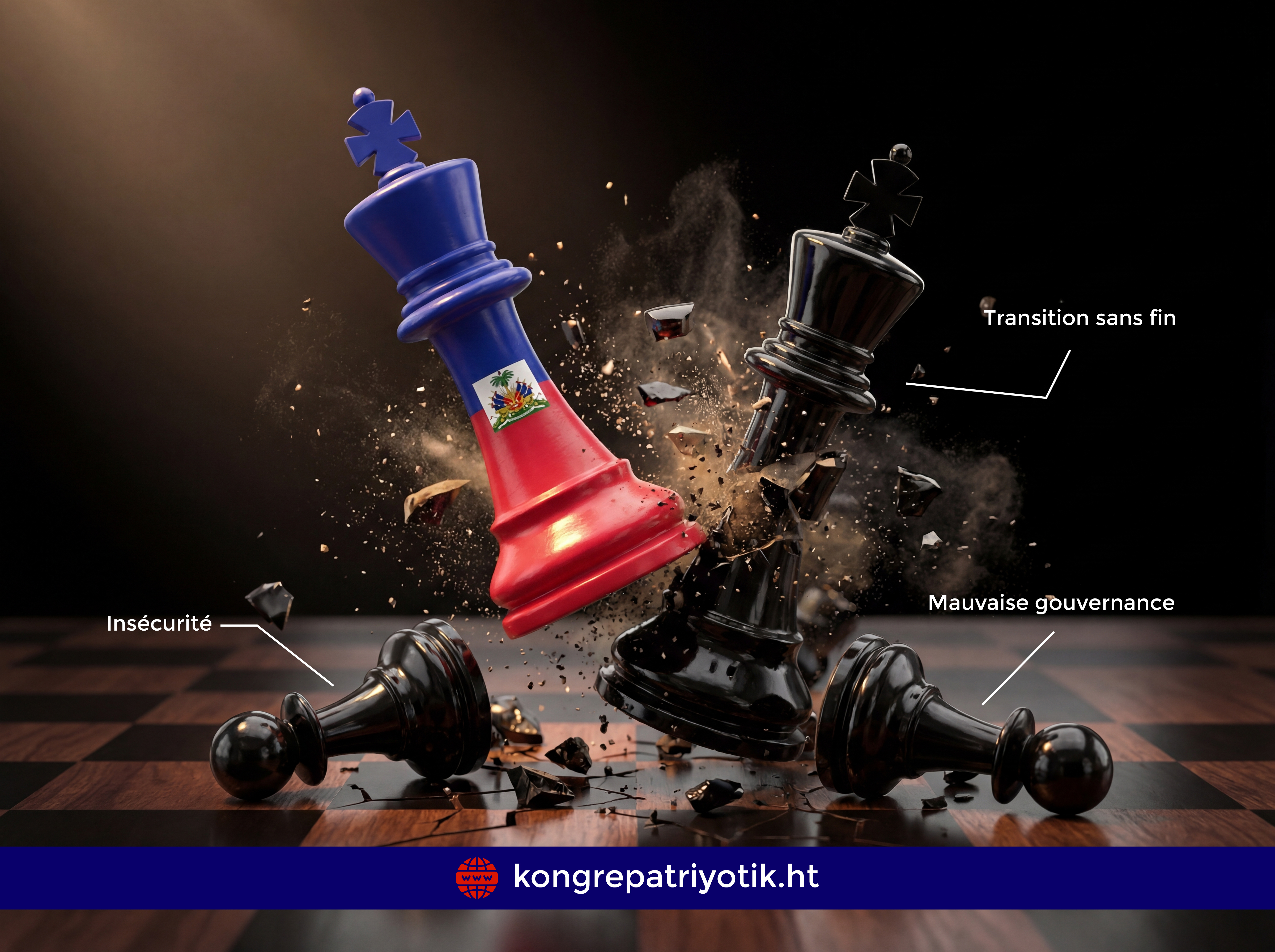
As the transition stalls, governance collapses, and insecurity suffocates the population, the KPSN offers a blunt diagnosis and sounds the alarm. Faced with this national emergency, it is putting forward three priority areas that call for courageous decisions, broad citizen mobilization, and the restoration of a state capable of ensuring stability, authority, and real change. For several months, the KPSN has been conducting consultations, meetings, and analyses to understand the deep roots of the national crisis. Through its work bringing together academics, political actors, citizen organizations, experts, and representatives from the ten departments, the movement has reached an unequivocal conclusion: Haiti is caught in a triple lock that blocks all progress. Weak governance, endless transition, and widespread insecurity are at the heart of the obstacles that paralyze the state and weaken society. Based on this observation, supported by broad citizen participation, the KPSN is now proposing three courses of action to finally break the deadlock and pave the way for lasting change.
Security remains the essential first pillar and a prerequisite for any national recovery. Without security, there can be no economy, no governance, and no credible transition. The KPSN emphasizes the need for a coherent, sustainable security plan, free from the political improvisations that have weakened the state for too long. It calls for the restructuring of the security forces, the restoration of territorial control, and the strict protection of public institutions, schools, universities, hospitals, and courts. Only by restoring public order, guaranteeing freedom of movement, and protecting citizens can the nation catch its breath and resume its march toward stability.
The second axis highlights the institutional impasse represented by a transition that drags on with no clear end in sight. For the KPSN, the way out of the crisis requires a realistic political timetable, credible transitional leadership, and less fragmented decision-making mechanisms. The goal is to end the current paralysis, in which institutions are weakening and losing their legitimacy. The movement advocates for an orderly, time-limited transition with a clear mandate and focused on organizing free, sovereign, and technically viable elections. This approach aims to restore citizen and political confidence, which is essential for lasting stability in the country.
The third pillar highlights the urgent need to rethink and overhaul governance after years of institutional abuses. The KPSN calls for a rebuilding of the state based on efficiency, transparency, and public accountability. This involves modernizing administrations, fighting corruption, clarifying the functions of the state, upgrading judicial institutions, and building new mechanisms for democratic control. Renewed governance must restore the state's legitimate authority, restore fairness in public management, and finally enable the implementation of sustainable policies that serve the population. For the KPSN, this means putting good governance back at the heart of the national project.
The main difficulty lies in restoring order and protecting citizens and institutions. Without a secure foundation, vital infrastructure such as schools, universities, hospitals, and roads remain under constant threat, and any attempt at development is undermined. Furthermore, the prolonged political transition creates an institutional vacuum that weakens the legitimacy of decisions and slows down the implementation of necessary reforms. Finally, the overhaul of governance is a major strategic challenge, as an inefficient or corrupt administration cannot guarantee the proper allocation of resources and respect for citizens' rights.
This combination of weaknesses has a cumulative effect on the country. Widespread insecurity slows down the economy, limits investment, and complicates the delivery of humanitarian aid, while paralyzing the daily functioning of institutions. Furthermore, the lack of a clear timetable for the prolonged transition fuels political uncertainty and undermines public initiatives, delaying crucial decisions and exacerbating administrative disorganization. In addition, poor governance contributes to the inefficiency of public services and corruption, which prevents the state from fulfilling its primary mission and compromises economic and social development.
The repercussions on citizens are immediate and tangible. In fact, constant insecurity restricts access to essential services and endangers the daily lives of families, while travel becomes perilous and the continuity of school and medical activities is disrupted. Furthermore, the prolonged transition deprives the population of legitimate representatives, fueling a sense of exclusion and powerlessness in the face of decisions that affect their daily lives. Finally, poor governance results in failing public services, poorly maintained infrastructure, and unequal justice, exacerbating poverty and limiting economic opportunities, with direct consequences on everyone's lives. Beyond the observations and challenges, one truth remains: Haiti still has all the strength it needs to recover. The skills, youth, creativity, and determination already exist; all that is missing is our collective will to unite them and direct them toward a common goal. Every action counts, every voice matters, every commitment adds another brick to the national edifice we want to rebuild. Today, we have a historic opportunity to prove that fatalism is not our destiny. By choosing unity over resignation, responsibility over fear, we can turn this crisis into a turning point. Haiti's future no longer depends solely on what we hope for, but on what we decide to do. And choosing to act, together, is already a step toward victory.
Comments(0)

(509) 4876-9204
info@kongrepatriyotik.ht
#12, Juvénat 6, Haiti
copyright © 2026 | Patriotic Congress for National Salvation, All rights reserved.
